
FCA Certified Collision Repair
Ann Arbor and Canton, MI
Your Jeep Climbed the Rubicon Trail. Your Ram Hauled the Whole Family’s Boat to the Lake.
That Kind of Trust Deserves an FCA Certified Collision Repair.
It’s a real program with more than 40 separate requirements, and it covers Jeep, Ram, Dodge, and Chrysler under one roof, because that’s how the manufacturer actually structured it.
We’re talking I-CAR Gold Class training for every technician, genuine Mopar parts, and repair equipment specific to whatever’s actually on your lift, aluminum tooling for one job, high-strength steel gear for the next.
Every year, an auditor for FCA looks at our equipment, our training records, and our facility, and confirms we’re still doing this the right way. Not once. Every year.
Most independent body shops here have never been through that process. We have, twice, once for Ann Arbor and once for Canton.
So when your Jeep or your Ram rolls in, you’re not hoping we know what we’re doing. You already know.





Benefits of Choosing Heritage Collision FCA Certified Body Shops

By trusting Heritage Collision, you’re making a wise investment in your FCA vehicle’s longevity, appearance, and resale value, knowing we’ll ensure your vehicle performs safely and efficiently for years to come.
- Genuine FCA Parts to original quality.
- Factory-Trained Technicians in FCA’s own requirements.
- Maintain Warranty Protection by selecting certified repairs.
- Advanced Technology with tools approved by FCA.
At Heritage Collision, our certification is measured by customer service and your overall satisfaction with the repair experience.
We thank you for choosing us.
WHY DO FCA OWNERS CHOOSE HERITAGE COLLISION?
Honestly, because we don’t treat every FCA vehicle like it’s the same truck.
It isn’t, and pretending otherwise is where things go wrong.
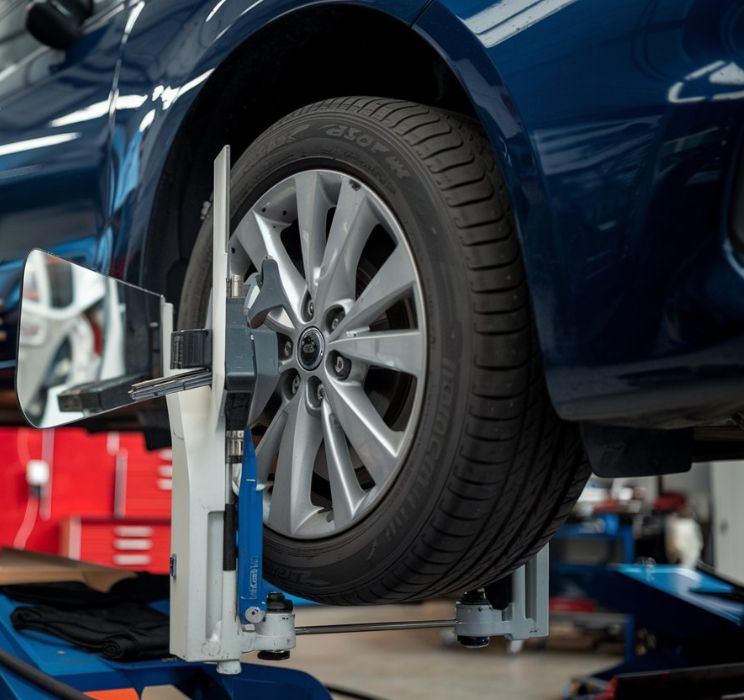
Manufacturer Trained FCA Certified Collision Repair
What Manufacturer Trained Actually Looks Like, Day to Day
Heritage Collision technicians train specifically on Jeep’s body-on-frame construction and Ram’s frame steel requirements separately because they’re distinct skills.
Our training is updated as FCA rolls out new platforms, including the electrified lineup, Wrangler 4xe and Grand Cherokee 4xe, where a structural repair near the battery pack means high-voltage safety training isn’t optional; it has to be right.
What that means for your specific repair:
- Wrangler and Gladiator get body-on-frame procedures, not a shortcut borrowed from a unibody repair
- Ram’s advanced and ultra-high-strength steel components get replaced as complete assemblies where FCA’s own bulletins require it, not sectioned to save time
- Grand Cherokee, Durango, and Charger get the correct unibody sectioning and welding locations for their specific structural zones
- Genuine Mopar parts go in, correct fit, correct sensor bracket position, correct everything
- Wrangler 4xe and Grand Cherokee 4xe get high-voltage safety protocol before anyone opens a panel near the battery
Michigan winter note: road salt is brutal on frame steel and rocker panels alike. We apply corrosion protection at every repair seam as a standard step, not something you have to think to ask for.


Did you know the FCA Active Driving Assist ADAS system requires recalibration after any impact?
Active Driving Assist sounds simple. Knowing exactly which version your vehicle has and recalibrating it correctly after a repair isn’t.
Here’s the honest version. FCA doesn’t bundle everything into one branded system the way some other manufacturers do. Features show up model by model, sometimes trim by trim.
Your Grand Cherokee might have Active Driving Assist. A higher trim might have the hands-free version if your vehicle meets the connectivity requirements. Every vehicle is different, so we check before calibrating.
Full-Speed Forward Collision Warning (FCW) with Active Braking: Monitors for potential front-end impacts, issues audible/visual warnings, and can automatically apply the brakes if the driver fails to respond.
Adaptive Cruise Control: The thing that actually makes I-94 traffic bearable.
Active Driving Assist: Provides hands-on lane centering and adaptive cruise control, which manages acceleration, braking, and steering. We confirm your exact trim; we do not assume it.
Blind Spot Monitoring and Rear Cross Traffic Alert: Uses rear sensors to alert you to vehicles in your blind spot and traffic crossing behind while in reverse. Useful when backing out of a tight parking spot in Ann Arbor.
Lane Departure Warning and Lane Keep Assist: If your windshield, front fascia, or rear bumper got touched in an accident, these systems must be checked and recalibrated properly. Not reset, but recalibrated to your specific Jeep or Ram’s requirements.
HERITAGE COLLISION
Your Trail Days and Tow Days Deserve a Repair That Actually Understands the Difference.
📍 Canton: 4985 Belleville Rd
📍 Ann Arbor: 6550 Jackson Rd
YOU’VE GOT FCA QUESTIONS
WE’VE GOT THE ANSWERS
Yes, walk in for a free estimate at either location, or send photos online for a quote before you come in.
Wrangler, Gladiator, Grand Cherokee, Compass, Ram 1500, 2500, and 3500, Charger, Durango, and Pacifica, including the electrified 4xe models.
It depends on the vehicle and the damage. A cosmetic repair on a Charger might take a few days. A structural repair on a Ram frame or a body on frame Jeep repair can take longer, since parts availability and correct procedure matter more than speed. We give you a realistic timeline at estimate, not an optimistic one.
Certified repair uses genuine Mopar parts and manufacturer specified procedures, which protects your safety, your warranty, and your resale value.
Heritage Collision coordinates directly with your insurance to minimize your out-of-pocket cost regardless of which shop you choose.
Yes, Heritage Collision is required under FCA certification for structural, cosmetic, and safety system components, ensuring correct fit, correct finish, and correct sensor bracket alignment.
Yes. Heritage Collisioin technicians are trained on high voltage safety protocols required for structural repair near the battery components on FCA’s electrified models. This is treated as a required first step, not an afterthought.
Only if the camera and radar are recalibrated to FCA’s exact specifications. This is a required, documented step in every qualifying repair at Heritage Collision, not an optional add on.
Quick question. Do you know what your Wrangler actually had to prove to earn that Trail Rated badge on the fender?
It’s not a marketing sticker. It’s five real tests: traction, water fording, maneuverability, articulation, and ground clearance. Your Jeep passed all five before it ever left the factory.
Here’s the part that matters after an accident.
Wrangler and Gladiator are built body-on-frame, the same basic idea as a heavy-duty truck: a separate frame the body sits on top of. Grand Cherokee, Durango, and Charger are unibody, where the frame and body are one welded structure. These are not small differences. They require completely different repair equipment and completely different procedures.
A body shop that fixes them the exact same way is skipping a step that matters, whether they realize it or not.
We don’t skip it. Silver Lake Sand Dunes trip planned for next spring? Kensington tow day with the family boat?
We want your Jeep back to doing exactly what it did before, not almost the same, exactly the same.
Your Ram’s Frame Is Tougher Than You Think, and That’s Exactly Why It’s Expensive to Fix Right
Here’s something FCA has actually said publicly, and most body shops never mention it. A lot of the steel in your Ram’s frame, up to 98 percent by some measurements, is high-strength or ultra-high-strength steel. That’s fantastic for towing your camper to Silver Lake or hauling equipment across Washtenaw County.
It also means one thing plainly. That steel usually cannot be cut and patched the way an older truck frame could. FCA’s own repair guidance says certain components have to be replaced whole, not sectioned, because heat and cutting can compromise the very strength that makes the frame worth having.
That’s not us upselling you. That’s the manufacturer being honest about what the metal actually requires. A body shop that doesn’t know this, or one that quietly sections a part that should have been replaced, isn’t saving you money. They’re handing you a truck that looks fine and isn’t rated the way you think it is anymore.
We follow FCA’s actual documented procedure, part by part, because your payload rating and your family’s safety depend on it, not on what’s fastest for us to repair.